读后续写心理神态环境描写:教材的原句里,藏着8句惊艳阅卷老师的万能句式
读后续写心理神态环境描写,不需要生僻大词。这份卡片里已经按“心理—神态—环境”分好了课本原句,你只要把每句的结构吃透,换主语、换场景,就能直接迁进考场。
一、读后续写心理描写:先学“情绪叠加”,再学“情绪转折”
① 危机解除的“情绪叠加+身体外显”
👉 教材原句(人教选修第三册 P45):
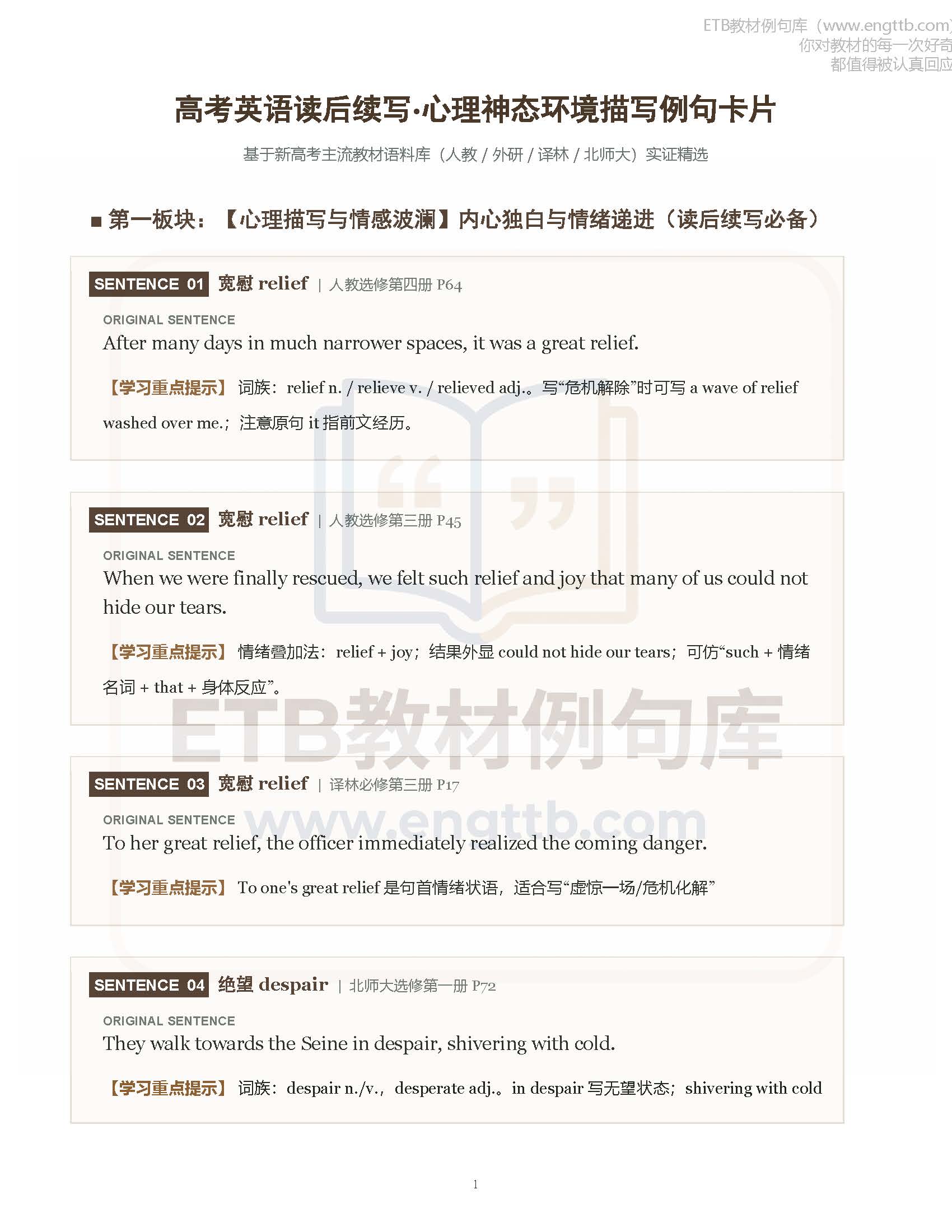
When we were finally rescued, we felt such relief and joy that many of us could not hide our tears.
🔍 拆解: 情绪叠加法:relief + joy 两种情绪并置,再用 such…that 接身体反应 could not hide our tears。写“获救/危机解除”时,先给情绪名词,再给身体动作,画面自己就出来了。
② 绝望不写 sad,让“状态+伴随动作”替你说
👉 教材原句(北师大选修第一册 P72):
They walk towards the Seine in despair, shivering with cold.
🔍 拆解: 主干动作 walk towards + 状态短语 in despair + 伴随状语 shivering with cold。全句没有 sad,但“无望”和“发抖”同时在场。迁移时只换地点和动作,结构不动。
③ 情绪转折:用“turns to”写发现真相的瞬间
👉 教材原句(北师大选修第一册 P72):
The Loisels arrive home at the Rue des Martyrs, and Mathilde's happiness turns to horror as she sees that the necklace is missing when she looks in the mirror to admire herself one more time.
🔍 拆解: happiness turns to horror as… 是情绪转折句的模板:前一刻是喜,后一刻是惊,as 引出触发事件。写“发现丢失/发现真相”的瞬间,这一句可以直接换主语。
④ 空虚与疏离:用“时间拟人+disconnected from”
👉 教材原句(SENTENCE 23,译林必修第三册 P39):
The empty hours stretched out in front of me, and I felt disconnected from everyone and everything.
🔍 拆解: hours stretched out 把时间拟人化,felt disconnected from 写孤独疏离。等待、失落、被冷落的情节,用这一句比反复写 lonely 更具体。
二、读后续写神态描写:比喻、动作链、目光移动
⑤ 脸色:一个明喻写尽惊恐
👉 教材原句(人教必修第三册 P90):
She, too, turned pale as a sheet.
🔍 拆解: pale as a sheet 是“脸色苍白如纸”的明喻。写惊恐、生病、失血,都比 her face was white 更有画面。词族:pale adj./v., paleness n.。
⑥ 颤抖:用“动作链”写手部特写
👉 教材原句(北师大选修第四册 P72):
Her brown fingers trembled, came up, grasped at the air.
🔍 拆解: trembled, came up, grasped at 三个动作连成一条链,最后 grasp at the air 写慌乱抓空。手部特写不需要形容词,动作本身就带情绪。
⑦ 目光:让“glance travelled from…to…”移动起来
👉 教材原句(外研选修第三册 P10):
Every moment Esmeralda discovered some fresh defect in Quasimodo, as her glance travelled from his knock knees to his hunched back, from his hunched back to his single eye.
🔍 拆解: her glance travelled from…to… 写目光移动,比 she looked at him 高级得多。写打量人物外貌、观察环境细节,都可以用“目光从A移到B”的框架。
三、读后续写环境描写:倒装制造悬疑,以静衬动写紧张
⑧ 阴影:倒装句让“突然出现”更有压迫感
👉 教材原句(北师大选修第三册 P47):
Suddenly, through the forest rose a shadow.
🔍 拆解: through the forest rose a shadow 是倒装,正常语序是 a shadow rose through the forest。倒装把 through the forest 提前,悬疑感更强。写森林、走廊、雾中“某物突然出现”,可以直接套。
⑨ 寂静:用“以静衬动”写暴风雨前的压迫
👉 教材原句(译林必修第三册 P23):
The sudden silence in the house seemed to make the wind and rain more frightening outside.
🔍 拆解: silence seemed to make…more frightening 是以静衬动:屋里越静,屋外越可怕。写灾难前、冲突前、告别前,都可以用“突然的安静让外面的声音更吓人”。
四、读后续写心理神态环境描写高频3问
Q1:心理描写只会写 happy/sad/angry,怎么办?
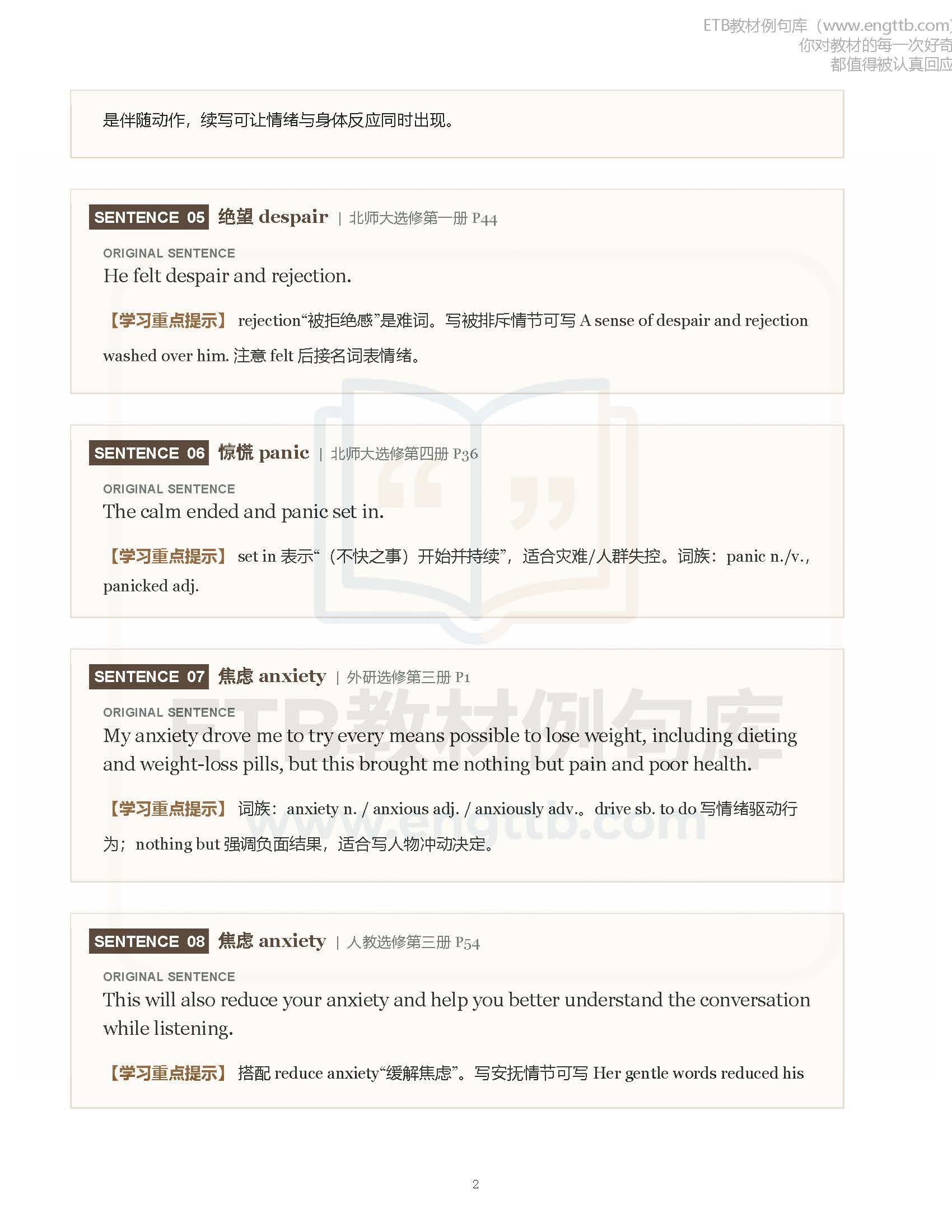
先学卡片里的“情绪叠加+身体外显”:such relief and joy that…could not hide our tears;再学“情绪转折”:happiness turns to horror as…。不要只给形容词,要给情绪名词+身体反应。
Q2:神态描写怎么避免反复用 frown?
用“动作链”和“目光移动”。卡片里 trembled, came up, grasped at the air 是动作链;her glance travelled from…to… 是目光移动。一个细节写透,比三个形容词堆上去更有用。
Q3:环境描写怎么写出高分氛围?
两条路:倒装制造悬疑(through the forest rose a shadow),以静衬动写紧张(the sudden silence…made the wind and rain more frightening)。环境不是背景板,它要替人物说话。
写在最后
语言不是冰冷的死记硬背,它是可以像积木一样搭建出精妙画面的。这份卡片里的每一句,都已经标好了词族、搭配和迁移方向,你不需要再到处找句子。
愿每一份认真的探索,都能换来考卷上的晴天 ☀️
立刻在例句库中检索文中所提的词汇短语和例句!